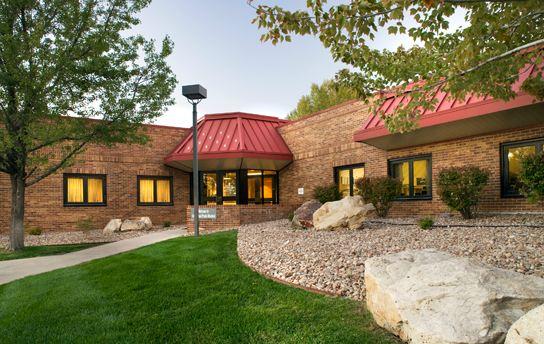
Centennial Peaks Hospital

Centennial Peaks Hospital
Let's Be More Than Just Pretty on the Outside! Let's Be Beautiful and Healing Within!

Everyone Deserves the Finest Health Care!

Everyone Deserves the Finest Health Care!
A Better Future for All Starting Now

Tuesday, December 15, 2015

Wrong Meds Part Five -- Most Egregious!

You do not, ever ever stop someone cold turkey on Lithium. But that is just what Centennial Peaks did. This was the reason I had to get myself out of there as soon as I could. So I could take the meds I needed. Shocking? Yes. Here's the story.


As chronicled in Eva Edelman’s volume,  Natural Healing for Bipolar Disorder, just about every bipolar person and arguably most people need some kind of lithium in their diet. Countries with higher lithium in their water tend to have fewer people with mental illness As Edelman’s book shows, lithium orotate is a more bioavailable form than the typical lithium carbonate and is highly recommended as it is more powerful at smaller dosages. Lithium is amazing medicine, and when in the orotate form that is safer, it is still the gold standard for bipolar disorder. Seroquel can stop the mania, but it is lithium that maintains the balance and is the best medication for bipolar proven to prevent suicide  It is known that bipolar patients who have recently experienced mania are at higher risk for suicide.


Patients are always told that they should never never suddenly stop taking lithium. According to the WebMd page on lithium carbonate, Stopping lithium therapy suddenly increases the chance that symptoms of bipolar disorder will return. The dose of lithium should be reduced gradually over at least 14 days.

Yet, I was denied access to lithium, a drug I have been faithfully been taking since May 12, 1991. This is about as criminal as denying insulin to a diabetic.

The unit allowed me to take my usual dosage of Lithium Orotate for one night and then decided to stop it because the lab could not ascertain whether the pills were in fact lithium orotate. Very well,
the unit has that right. But did they offer me any other form of lithium from their well-stocked pharmacy? No, they did not.

We have now left the realm of mere stupidity and have entered the realm of MALPRACTICE. 


Wrong Meds Part Four

Did you know that fish oil was so effective in helping bipolar patients that the original study by Andrew Stoll at McLean hospital was stopped short because it was just unethical to deprive the control group of fish oil? Sure there have been further studies saying this and that but my life changed when I started taking fish oil in 1999. 

But there are so important coniderations with fish oil. The first is sourcing. The cheap stuff you can buy could be tainted with all kinds of heavy metals. That is why (and I have no connection to the company) I always go with Nordic Naturals which is third party tested and comes from fish low on the food chain. The other is dosage. One pill is not going to do much for ya. In the original study the patients took 10 grams. I myself take 8 grams  after some 14 years of trial and error. I would say that I need at least 6 grams to sense a meaningful difference.

What did Centennial Peaks do?

They offered me just one gram. I could also tell that the brand they gave me was not Nordic Naturals.
I'm guessing it was probably some cheap stuff not sourced well, but I do not know. So perhaps it was better after all that they did not give me the correct dosage.

Tell me oh tell me do you think the doctors at Centennial have read the Stoll study? Do they appreciate the significance of fish oil fully? Do they care?

Wrong Meds Part Three

Blood pressure is an interesting thing. When it gets really high (and Seroquel can cause this), the temporary use of Western medicine can be helpful especially if like me you may have compromised kidneys. But not all blood pressure meds are alike. You don't just throw one of them at someone without research. Here's the story of me and the wrong blood pressure med at Centennial.

It was like this. They told me that they wanted me to take Coreg. No explanation as to why they chose this particular medication. I told them that my kidney doctor and my psychiatrist had determined that the best high pressure med for me was Verapimil. But of course why listen to a patient? So I figured that I should at least research this Coreg. I asked the nurse present to please get a PDR (Physician Drug Reference -- it's like the bible for medications that is used by doctors). She got me the equivalent. Sure enough I read about it and found two reasons that made it a nonoptimal choice for me: 1) it was not good for my blood sugar, already compromised by Seroquel and 2) it was not indicated for someone with kidney issues like myself.

From this short story we learn that there is no scrupulous intelligent thought process governing meds at Centennial Peaks. 

Wrong Meds Part Two

The wrong meds I was given at Centennial for a UTI destroyed the good bacteria in my gut (the last thing you want to do to someone with a mental health challenge) without actually addressing the UTI because they did not ask me some basic questions.

I only found out subsequent to my stay from the written records that they had given me the antibiotic Bactrim for a UTI.


If they had informed me, I could have told them the following even in a psychotic state:


1) I almost always have a elevated level of e.coli in my bladder. It does not reach the kidneys. In this case, it was better not to treat it with antibiotics at this time because most of one's serotonin (an essential neurotransmitter very important for bipolar stability is created in the gut.)


2)  The last few times I did take antibiotics for UTI, my cultures were resistant to Bactrim. Bactrim was definitely the wrong choice if one were to go the antibiotic route.


3) If they are going to go that route, it is essential to give me a probiotic to save my intestinal flora.


http://science.kqed.org/quest/2012/12/10/dynamic-duo-antibiotics-and-probiotics/ 


And this bad med episode is just the beginning!

Wrong Meds Part One


Perhaps the greatest negligence at Centennial Peaks involved medication. They did not give me the meds I needed, tried to give me meds that were harmful for me and did not ask me the basic questions that would have led to proper meds. This aspect of my exposé alone is a reason to shut down this incompetent and harmful Psych Ward.


Over the course of twenty years and in consultation with both numerous psychiatrists (including the outstanding Dr. David Rosenthal), holistic practioners and the most excellent volume by Eva Edelman, Natural Healing for Bipolar Disorder, I and my team have a pretty good idea of what meds work for me and which do not.

Here is a list of what I typically take at home.

Western Meds
Seroquel 150-300 mg
Lithium Orotate up to 35 mg

Vitamins
C, D3, B-6, B-3, folate, B-Complex, E

Minerals
Zinc, Magnesium, Manganese

Neurotransmitters and Precursors
Glycine, Taurine, 5HTP, L-Tryptophan, occassional BCAA, GABA

Other
Co-Q-10, NAC, L-Carnitine, assorted herbs and herbal preparation (Tibetan ayurveda), probiotics
Nordic Naturals Fish oil Ultimate Omega 8 grams
Wood Betony, Valerian, Passionflower, Hops

When High Blood Pressure requires treatment

Verapimil — this drug has been vetted by both my psychiatrist and my kidney doctor Dr. Jerald Boseman as being safe for my kidneys and brain, the former which has a moderate level of damage.


Now in going to a psych ward, I did not expect to be able to take all of the supplements I take usually.  But I had no idea at the level of ignorance, incompetence and dare I say malpractice I would experience at the hands of this Bad Psych Ward as I will detail next.

Negligence and Sleep

Don't you think a Psych Ward would do everything it can to help their patients sleep? Especially since there is such a strong link between sleep hygience and mental health. Apparently not!

I have been diagnosed with obstructive sleep apnea. Since 2010 I have used a device known as a CPAP nightly which by forcing air down my lungs has done wonders for my sleep. Most people would agree that sleep is essential for one’s health and and my stability in general and many might also know that individuals with psychiatric challenges especially benefit from good sleep. But fewer would know that sleep apnea is in fact linked to Bipolar Disorder.[1] Therefore it would seem that that access to my CPAP would be essential to my treatment.

Although my husband dropped the machine off with a clear label for affixing, I did not receive the device for several days. At first they claimed they did not know it was mine. Then they claimed they found me sleeping without snoring and decided I did not need it after all. In blog posts on medication and supplements I will go into further depth that by denying me an appropriate dose of lithium, fish oil as well as 5HTP my sleep and thus my mental health was further compromised, lengthening my stay in the unit.


[1] Isabella Soreca, Jessica Levenson, Meredith Lotz, Ellen Frank, and David J Kupfer, Bipolar Sleep apnea risk and clinical correlates in patients with bipolar disorder,” Bipolar Disorder 14 (2012): 672-676).

Some Chickens in Boulder Have it Better -- Lack of Fresh Air for Non-Smokers


At Centennial Peaks it is hard for non-smokers to get fresh air!

I do not think it is necessary to demonstrate the importance of fresh air and natural sunlight for anyone’s health and particularly for patients with psychiatric challenges. European sanitariums and even the famous MacLean hospital in Massachusetts use nature as healing. However, just as with prison inmates, patients do not have full privileges initially.[1]

Until the patient has seen a doctor, they are not allowed outside to the courtyard with the basketball court. And even so this access is highly limited (once a day it seemed) in comparison with the the number of times in which smokers are permitted outside during the numerous smoke breaks (at least four times, perhaps even more).[2] As a non-smoker with sensitive lungs, if I had not seen a doctor or had missed gym time, I had no other recourse to obtain fresh air except when it is clouded with smoke. As I explained this to a staff member with long smooth dark hair she sharply told me, “You do have a choice.” A choice between no fresh air and polluted air? I also begged staff to permit me a scant two minutes of fresh air before the smokers came in and this was summarily denied.


[1] On the sociology of the psychiatric ward, Erving Goffman,. Asylums: Essays on the social situation of mental patients and other inmates. Aldine Transaction, 1968.)
[2] The frequency of these smoke breaks, far greater than I have witnessed in other impatient units, combined with the unit actually supplying cigarettes is rather curious. It remains shocking that the unit is happy to supply a deadly drug yet as will be seen shortly, will deny me my lithium.